
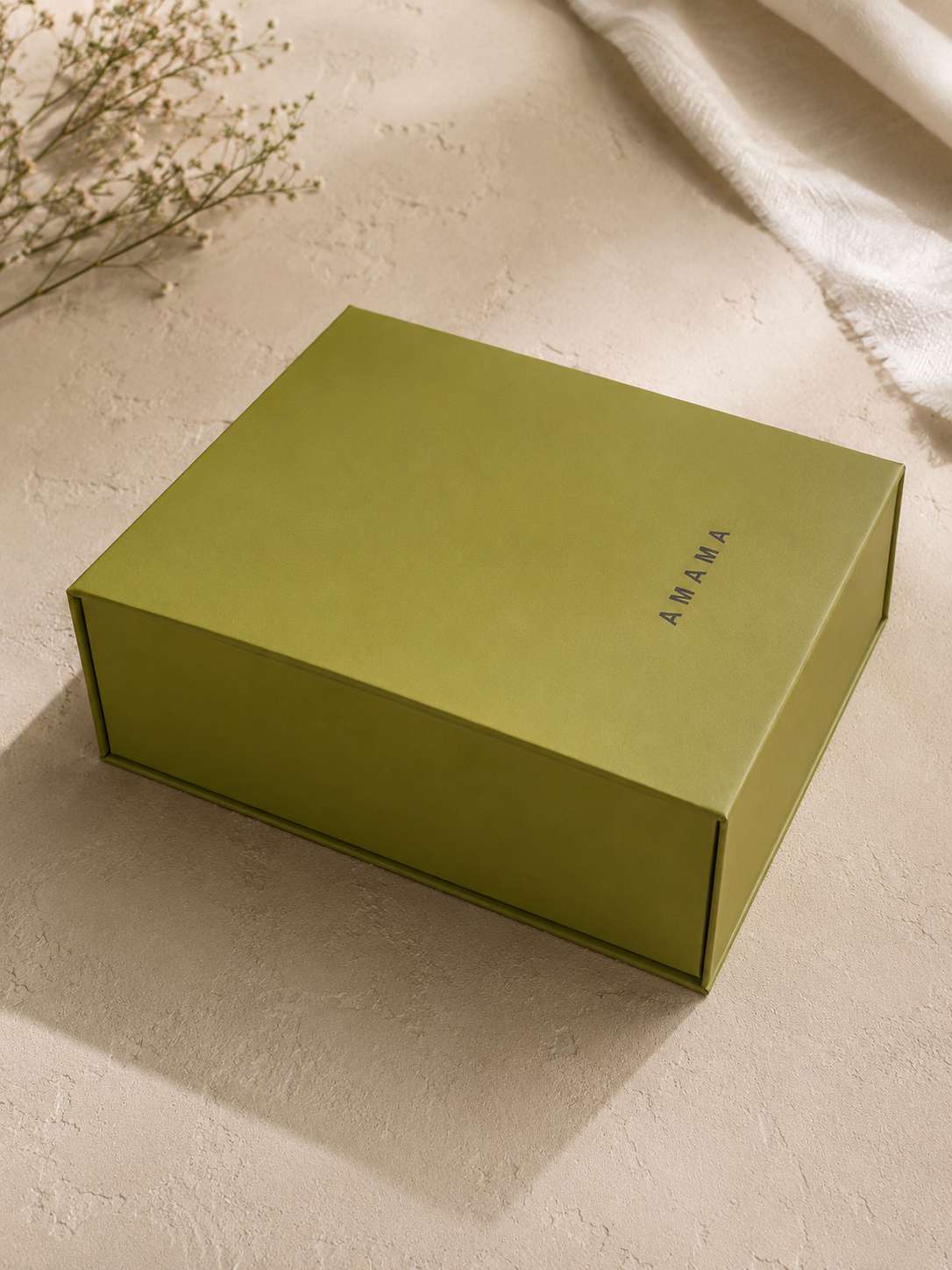
How a magnetic closure box is built
A magnetic closure box is a single-piece wrapped rigid box with a hinged lid and an extended front flap. Two pairs of neodymium magnets are set into recesses — one pair in the flap, one in the base — and covered by the wrap so nothing is visible from outside.
The magnets are glued into pockets routed into the board before wrapping. Done properly, the lid lands flush and closes with one quiet action; done badly, the flap bounces or the magnets telegraph through the paper.
Magnet sizing is a weight calculation
Magnet strength is specified against the lid weight and the flap length, not chosen as a default. A large apparel box with a long flap needs more or stronger magnets than a small jewellery box, and over-magnetising a small box makes it unpleasant to open.
- Small boxes under 150 mm — two 10 mm discs are typically enough
- Medium gift and beauty sets — two to four discs, positioned at the flap corners
- Large hamper and apparel boxes — four or more, with a thicker flap board to stop flexing
What to send for a magnetic box quotation
The faster route to a real price is product dimensions and weight, an indicative quantity, the wrap and finish you have in mind, and a reference photograph. From that we can produce a die-line and a physical prototype in the actual materials.
Magnetic closure box vs lid and base box
A magnetic box is one piece, so there is no lid to misplace and the unboxing is a single reveal. A lid and base box is two pieces, cheaper at volume, easier to pack on a line and better suited to deep or heavy contents. If the box will be reused by the customer, magnetic wins; if it is shipping in bulk to a warehouse, lid and base is usually the sensible specification.